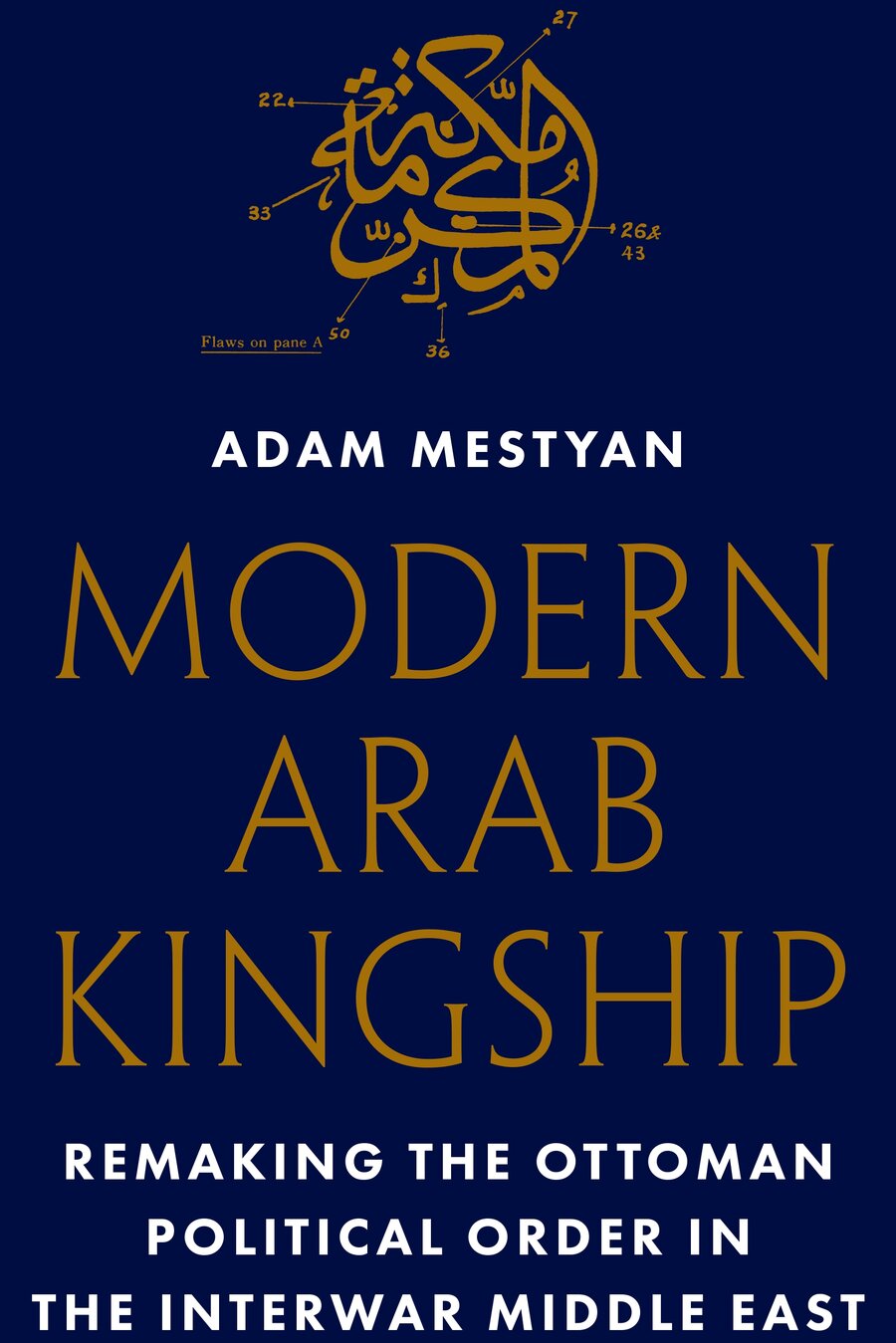
Kingship
Modern Arab Kingship - Remaking the Ottoman Political Order in the Interwar Middle East
In this groundbreaking book, Adam Mestyan argues that post-Ottoman Arab political orders were not, as many historians believe, products of European colonialism but of the process of "recycling empire." Mestyan shows that in the post–World War I Middle East, Allied Powers officials and ex-Ottoman patricians collaborated to remake imperial institutions, recycling earlier Ottoman uses of genealogy and religion in the creation of new polities, with the exception of colonized Palestine.
Drawing on previously unused Ottoman, French, Syrian, and Saudi archival sources, Mestyan explores ideas and practices of creating composite polities in the interwar Middle East, shedding light on local agency in the making of the forgotten Kingdom of the Hijaz, Jordan, Egypt, Saudi Arabia, and Syria, the first Muslim republic.
Available in hardcover from Princeton University Press and Amazon, and as an e-book from Kindle, Google Play, and other vendors.
View at Princeton University Press"a highly original reworking of the ways in which the history of this era in the Middle East has been understood." — Faisal Devji
"In this deeply researched and conceptually rich history of the Arab monarchies that succeeded the Ottoman Empire, Adam Mestyan explores the recycling and transformation of imperial ideas and practices." — Jennifer Pitts
"The approach is unconventional, compelling, and filled with intellectual surprises." — Andrew Shryock
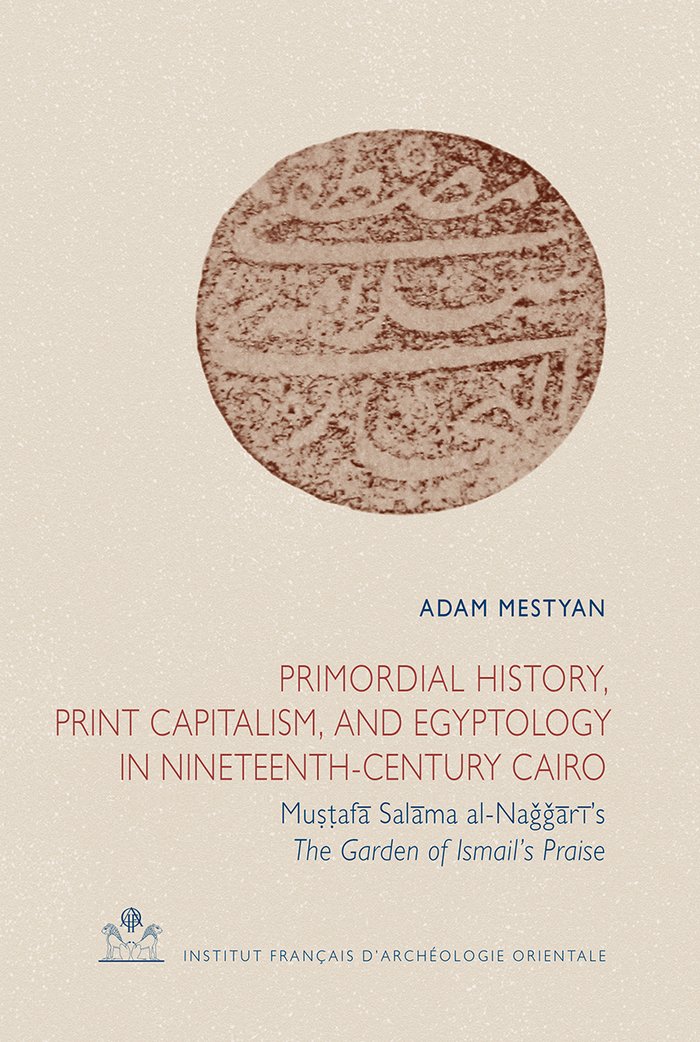
Primordial History, Print Capitalism, and Egyptology in Nineteenth-Century Cairo
How old is the world? This question was a central problem for Muslims, Christians, and Jews in the face of the new scientific discoveries in the nineteenth century. This book introduces the answer from a Muslim point of view, outside of official institutions. The extended introduction — a microhistory in the Middle East — explores the life and œuvre of a forgotten Egyptian intellectual and poet, Muṣṭafā Salāma al-Naǧǧārī (d. 1870).
Mestyan provides the English translation and Arabic transcription of the surviving fragments of al-Naǧǧārī's manuscript, The Garden of Ismail's Praise, a universal history of Egypt written while the Suez Canal was under construction, praising the governor Khedive Ismail (r. 1863–1879).
Available in hardcover from Ifao and Amazon, and as an e-book from Ifao and Google Play.
More about this book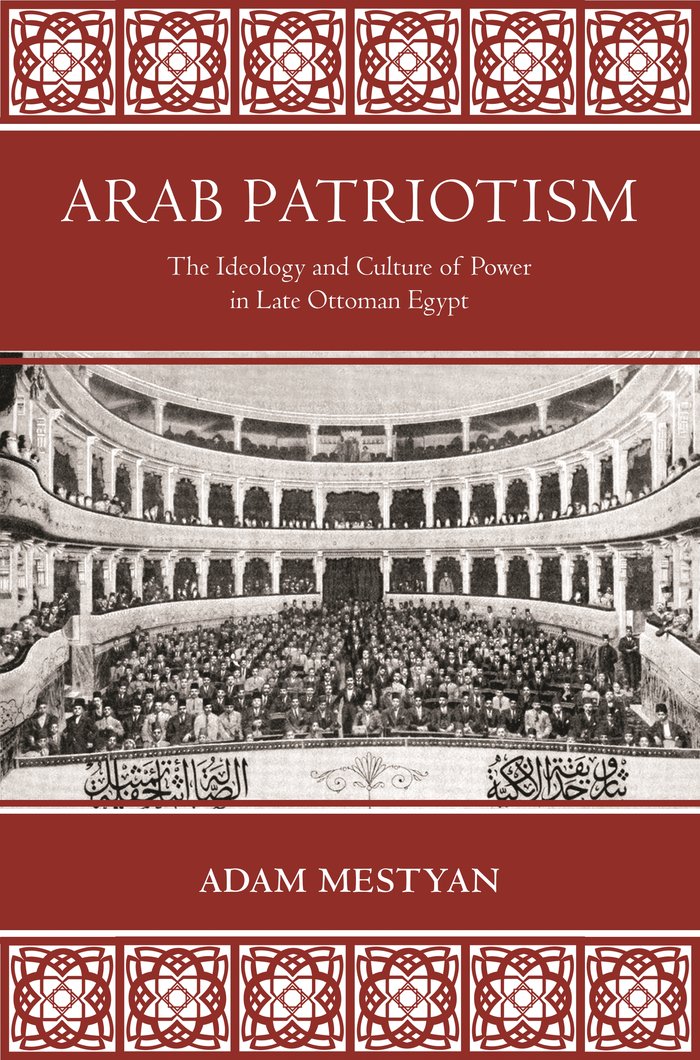
Patriotism
Arab Patriotism - The Ideology and Culture of Power in Late Ottoman Egypt
Adam Mestyan's first monograph, Arab Patriotism: The Ideology and Culture of Power in Late Ottoman Egypt, challenges the received narrative that Arabism in general and Egyptian territorial nationalism in particular emerged in opposition to the Ottoman and British Empires and primarily from below.
The author argues instead that early Arabic nationalist culture was produced in dialogue with localized Ottoman power by educated Arabs who integrated Muslim and European cultural forms in their search for political inclusion and patronage. Based on archival research in Egypt, Turkey, France, the UK, and the USA, the book offers the first scholarly investigation of the Egyptian khedivate between the 1860s and the 1890s.
The book is available at Amazon in hardcover and e-book formats as well.
View at Princeton University Press"The nineteenth-century Mediterranean region emerges in a new and unexpected light." — Jürgen Osterhammel
"A superb scholarly achievement." — Ehud Toledano
"This is one of the most exciting new works that I have read in recent years." — Eugene Rogan
"Mestyan paints a detailed and animated picture of a rich cultural landscape." — Khaled Fahmy